
QR Code on a Resume or CV: Where to Put It and What to Link
Put one QR code in the top corner or footer, sized at least 2 cm square, linking to a portfolio, digital vCard, or link-in-bio page — not a bare document URL. Always print the destination as a text link too, so the information survives even if a recruiter doesn't scan.
By Chaara, Founder of Qrogo · Published July 25, 2026 · Updated September 19, 2026
The short answer
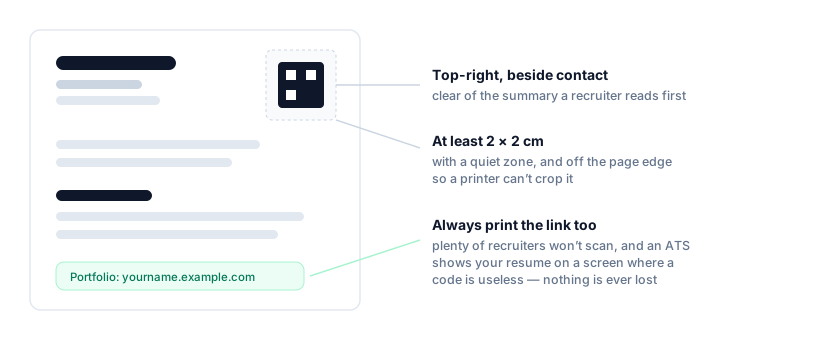
Put one QR code in the top-right corner beside your contact block, or centered in the footer, and keep it at least 2 × 2 cm on a printed A4 or Letter page. Leave a few millimetres of white space around it so scanners can lock on, and keep it off the page edge so a printer can't crop it. Point it at something a flat page cannot show — a portfolio, a digital vCard, or a link-in-bio page that ties your work, profile, and contact details together — never at a raw file URL that might move.
The rule that separates a useful resume QR from a gimmick: it must degrade gracefully. Plenty of recruiters will not scan, and applicant-tracking systems show your resume on a screen where a code is useless. So always print the destination as an ordinary text link right beside it. Use a static, permanent code, since a job hunt can run for months.
What to link (this is the part people get wrong)
A QR code is only worth the space if it opens something a flat page can't show. Don't point it at a raw file URL that might move — point it at a small hub you control:
- Portfolio or work samples — the strongest choice for designers, developers, writers.
- A digital vCard so they can save your contact in one tap — make one with the vCard generator.
- LinkedIn, if that's your most complete profile.
- A link-in-bio page that ties portfolio, LinkedIn, and contact together — build one as a hosted page so a single code covers everything.
| Link it to | Best for | Why it works |
|---|---|---|
| Portfolio or work samples | Designers, developers, writers, architects | Shows the work itself, which a page of bullet points can’t |
| A digital vCard | Sales, consulting, anyone networking in person | Saves your details to their phone in one tap |
| Corporate roles where it’s your fullest profile | Recruiters already know how to read it | |
| A link-in-bio page | Anyone with more than one thing to show | One code covers portfolio, profile and contact at once |
| A raw file URL | Nothing — avoid this | File links move or expire, and the code can’t be corrected after printing |
Should the QR code go to your LinkedIn?
Often yes — but only if LinkedIn is genuinely your most complete profile. It's the right target when your track record is the selling point and there's nothing to show visually: recruiters already know how to read it, it's kept current without you touching the resume, and it carries recommendations a PDF can't.
It's the wrong target if you have work to show. A designer, developer, writer or photographer sending a recruiter to a profile page instead of the portfolio has spent the scan on the weaker asset.
Two practical notes. Use your custom LinkedIn URL(linkedin.com/in/yourname, set it in your profile settings) rather than the default one full of digits — it's what you'll print as the text fallback beside the code. And if you want LinkedIn and a portfolio and your contact details from one code, don't pick: point it at a link-in-bio page that holds all three, which also means you can change any of them without reprinting.
Where to place it
Top-right corner beside your contact block, or centered in the footer. Keep it clear of the summary and first job entry — the text a recruiter reads in the first six seconds. Leave a few millimetres of white space around it (the "quiet zone") or scanners struggle, and keep it away from the page edge so a printer can't crop it.
What size to make it
Aim for at least 2 x 2 cm (~0.8 inch) on a printed A4 or Letter page. Smaller than that and phones fumble it, especially older cameras. Download as a crisp vector or high-resolution file so it stays sharp in print, and test-scan the actual printout, not the screen.
The fallback that makes it professional
Here's the rule that separates a smart resume QR from a gimmicky one: it must degrade gracefully. Some recruiters will scan it, plenty won't, and many applicant-tracking systems display your resume on a screen where a code is useless. So always print the destination as a normal text link right next to the code (for example, "Portfolio: yourname.example.com"). Then nothing is ever lost.
Make it free — and make it last
A job hunt can run for months, and you might reuse the same printed resume at a career fair a year later, so you want a code that never expires and costs nothing. Qrogo's free codes are static and permanent — no account needed just to generate one, and no risk of it lapsing mid-search. If you link a hosted page, you can also update that page's contents later without changing the printed code.
Frequently asked questions
Where do I put a QR code on my resume?
Top corner next to your contact details, or the footer. Keep it out of the way of the text a recruiter skims first, and never place it where a printer might crop it. One code is plenty — more looks cluttered.
What should a resume QR code link to?
A single destination that adds value beyond the page: a portfolio, a digital vCard, a LinkedIn profile, or a link-in-bio page tying them together. Avoid linking a bare document URL that could move or expire.
Should I put a LinkedIn QR code on my CV?
Only if LinkedIn is your most complete profile — it works well when your track record is the selling point. If you have work to show, point the code at a portfolio instead. Use your custom linkedin.com/in/yourname URL, and print it as text beside the code so it still works unscanned.
How big should a QR code be on a resume?
At least 2 x 2 cm (about 0.8 inch) so a phone reads it comfortably from a printed page, with a small clear margin around it. Test the actual print, not just the screen.
Is a QR code on a resume a good idea?
Yes, if it degrades gracefully. Some recruiters scan, many won't, and some systems view resumes on-screen. Always print the destination as a normal text link too, so nothing is lost if the code isn't scanned.