Static vs Dynamic QR Codes: Which Do You Actually Need?
A static QR code stores its data directly in the pattern, so it's permanent and free but can't be edited. A dynamic QR code stores a short link you control, so you can change where it points after printing and see scan analytics. Choose static for fixed data, dynamic for anything you might update or measure.
By Chaara, Founder of Qrogo · Published June 20, 2026 · Updated September 17, 2026
The short answer
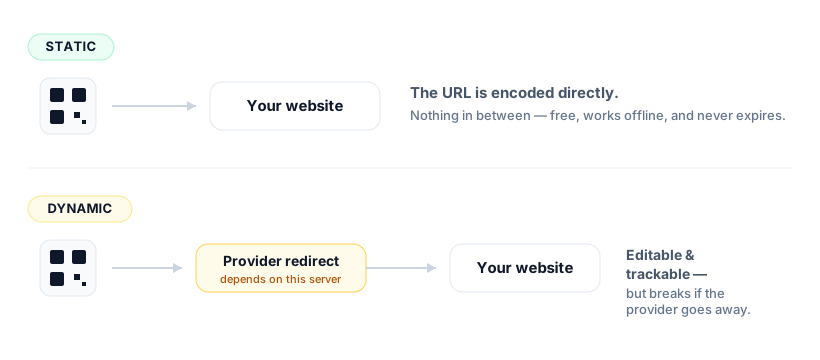
A static code is the data; a dynamic code points to the data. That one distinction decides everything else. With a static code your URL, Wi-Fi details, or contact card are encoded straight into the pattern, so it needs no account, never expires, and works offline — but the destination is fixed the moment you print it. A dynamic code encodes a short redirect link instead, so you can change where it goes after printing and the redirect step lets the provider count scans.
Choose static for fixed data and permanent prints: Wi-Fi codes, vCards, one-off signage. Choose dynamic when a wrong URL would be expensive to reprint, or when you need scan analytics. The catch to watch for is "free" tools that quietly issue dynamic codes on a trial, which stop redirecting later. Qrogo's free codes are static and permanent; dynamic codes are a separate account feature.
Static vs dynamic at a glance
| Static | Dynamic | |
|---|---|---|
| What the pattern holds | Your data itself | A short redirect link |
| Editable after printing | No | Yes |
| Scan analytics | None possible | Counts by device and country |
| Expires | Never | When the plan or provider ends |
| Account needed | No | Yes |
| Works offline | Yes — Wi-Fi and vCard codes need no connection | No — the redirect must be reachable |
| Cost at Qrogo | Free, unlimited, no watermark | Free account, country-only analytics |
| Best for | Wi-Fi, vCards, permanent prints | Packaging, campaigns, menus, link-in-bio |
How each one works
With a static code, your URL (or Wi-Fi details, or contact card) is encoded straight into the black-and-white pattern. Nothing sits between the scanner and your data, so it never expires and needs no account — but the pattern is fixed forever once you print it.
A dynamic code encodes a short redirect link. When someone scans it, they hit that link first and get forwarded to your real destination. Because you own the redirect, you can change the destination anytime, and the redirect step lets the service count scans.
When static wins
- Wi-Fi codes — the password won't change often, and you want it to work offline.
- vCards on printed cards — contact details encoded directly, no dependency on any service.
- One-off prints where the link is permanent and you don't need analytics.
When dynamic wins
- Anything printed at volume — packaging, flyers, signage — where a wrong or changed URL would be expensive to reprint.
- Campaigns you want to measure — dynamic codes record scans by device and country.
- Menus and link-in-bio — point the code at a hosted page you edit anytime.
The "free" catch to watch for
Many tools advertise "free QR codes" but quietly issue dynamic codes that stop working after a trial unless you pay — your printed code becomes a dead link. Always check whether a free code is static (permanent) or dynamic (tied to the service). Qrogo's free codes are static and never expire; dynamic codes are a separate, account-based feature with analytics — and they keep working.
Quick decision guide
- Will the destination ever change? → Dynamic.
- Do you want scan analytics? → Dynamic.
- Is it fixed data like Wi-Fi or a vCard? → Static.
- Just need a permanent free code, no tracking? → Static.
Frequently asked questions
Do static QR codes expire?
No. A static code encodes the data directly, so it works as long as the destination it points to exists. There is nothing to renew.
Do dynamic QR codes expire?
They keep working as long as the service hosting the short link is active and your account is in good standing. On Qrogo, your dynamic codes stay live and you control the destination.
Can I turn a static code into a dynamic one?
No — they're different by design. A static code's data is fixed once printed. If you might need to change it, start with a dynamic code.
Which is better for printing?
If the destination will never change (a Wi-Fi password, a vCard), static is simpler and permanent. If you might re-target it or want scan analytics, use dynamic.